A 6-step guide to setting your goals for the year in spring
If you follow me on social media or you get my newsletter, you’ll know that I am a big believer that we shouldn’t set goals for the year in January, but instead wait for spring.
There are many reasons why January isn’t a great time to set goals. The biggest one is that we’re in the depths of winter and should be in hibernation mode, not trying to push forward with big changes for the year. In my experience, working towards goals in January can feel like trying to push a rock up a hill. It’s hard work and motivation quickly disappears!

Make it stand out
Instead, when spring arrives and the natural world starts to come back to life, so will you.
Your energy levels will naturally start to increase with the longer days and warmer weather, and you’ll have much more motivation to start making any positive changes you’ve been craving. It’s therefore a great time to reflect on what you want from the year (away from the new year pressure) and commit to goals that truly matter to you.
The other day I sat down and created my goals for 2026, and so I wanted to share the steps I took with you, in case it is also supportive to do the same:
Step 1: Think about how you want to feel by the end of the year
Rather than starting with what you want to get done or achieve, think about how you want to feel this year?
Tune into what your body and mind might be craving right now, but don’t overthink it. What comes to your mind first is usually the most appropriate word.
Here are some ideas - do any jump out at you? Or is there another word that has come to mind?
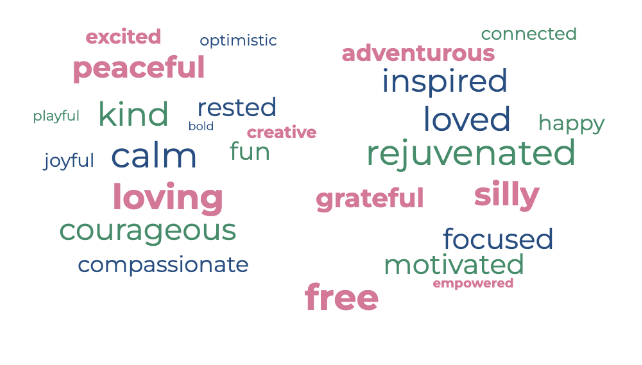
Once you’ve picked out a word or two, jot down all the activities, experiences, places, people that make you feel that way. Think about the big things but also the small simple pleasures too.
For example, if I wanted to feel rested this year, I would write down all the activities I know recharge my batteries:
Reading my book
Gardening
Long lunches
Naps
Watching favourite TV series with a cuppa
Weekends away
Being by water
Step 2: What is going to be supportive for your wellbeing this year?
Now we know how we want to feel, we need to make sure that we are also taking good care of ourselves this year. So take some time to think about what is going to support your physical, mental, and spiritual wellbeing and list out some ideas.
For example, to look after yourself physically this year you might want to:
Eat plenty of wholesome meals
Make time for joyful movement
Have 7-8 hours of sleep a night
Spend time in the fresh air
Have hot baths or showers
Have pamper nights or treat yourself to a massage
Looking after your mental wellbeing could include:
Having breaks from social media
Building breaks into your working days
Talking kindly to yourself
Practicing gratitude
Connecting with loved ones
Journaling
And looking after yourself spiritually is doing the things that make your heart sing and bring you joy. It could be things like:
Going to the seaside
Reading a good book
Having a warm cup of tea in bed
Learning something new
Doing something creative
Make sure you have at least 2 or 3 things for each area.
Step 3: Then what other projects are important for you this year?
This is a bit of a catch-all for any other projects, experiences, or areas that feel important for you to work towards this year that aren’t covered in the first two steps. Perhaps there’s a room you want to redecorate, a relationship you want to give some attention to, or a career goal you want to work towards. Try and limit these to one or two projects so that it doesn’t start to feel overwhelming.
Step 4: Write up your goals
This is where you take everything that you have written down in steps 1 - 3 and put them into goals for the year. I will always have a goal relating to how I want to feel this year (step 1) and a goal relating to my wellbeing (step 2), and then another goal to capture anything else that feels important this year (step 3).
For example:
Goal 1: I want to feel rested this year and so every month I will make time to do activities that recharge my cup (using the 7 types of rest model).
Goal 2: I want to prioritise my wellbeing this year by committing to do something for my mental, physical, and spiritual wellbeing every week.
Goal 3: I want to redecorate the spare room and get some new furniture so that it’s comfortable for guests and also works as an office when I’m working from home.
I would recommend trying to make your goals specific so they are easy to work towards.
Step 5: Make an action plan
Now we want to break down each of these goals into an action plan, one month at a time.
So take each of the goals, and decide what steps you are going to take in that month to start making progress towards it. You can make these as small and specific as possible. For example:
Goal 1 action: Do a rest audit to see which type of rest I might be deficient in.
Goal 2 action: Block time in my calendar on Sunday evenings to plan what I will do the following week to support my mental, physical and spiritual wellbeing for the coming week.
Goal 3 action: Put 4 paint samples on the wall.
Then book it in your calendar for when you are going to take each of these actions over the next month. If you don’t book the time in now you’ll find that the month will go by without taking the steps you set out for yourself. And we really don’t want that!
Step 6: Do a monthly review
The final step is to do a monthly review of the progress you’ve made against your goals. I like to do this towards the end of each month. It's time dedicated to answering the following questions:
What progress did you make? What wins can you celebrate (no matter how small)?
Did you come across any challenges? What lessons did you learn from these?
Do the goals you set for yourself still seem relevant? Is there anything you would want to change?
And then it’s time to set your action plan for the next month by going back to step 5.
By doing these monthly reviews and action planning you will be amazed at the the gentle momentum you build to make sustainable and substantial progress towards your goals for the year.
If you have any questions, please don’t hesitate to get in touch by emailing me on emily@emilydaviescoaching.com.
And if you’d like more, then please sign up to my newsletter where every fortnight I share insights into how I’m supporting myself to gently thrive, as well as the latest news on my offers.